
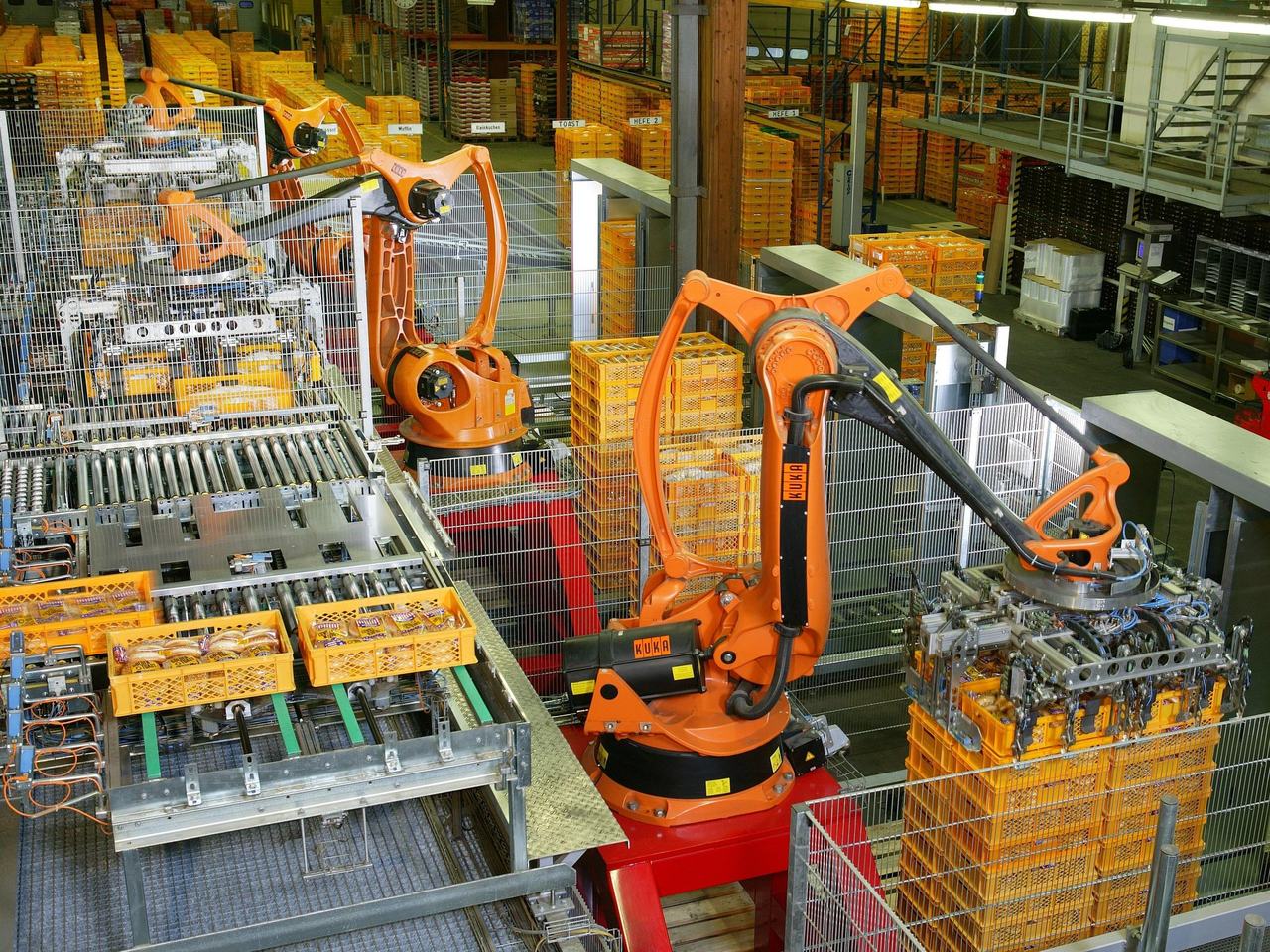
When a consumer AI gets an answer wrong, the cost is usually a moment of embarrassment: the user frowns and rephrases the question. On an industrial site, the cost of a wrong judgment is of a completely different order. Picture a production line: a vision inspection system passes a batch of defective parts, the defect surfaces only downstream, and the whole batch is scrapped. Or the reverse — normal variation is judged to be equipment failure, and one unplanned line stop costs hours of capacity. In scenarios involving pressure, temperature, or chemicals, a single misjudgment can stop being an efficiency problem and become a safety incident.
That is why we hold a simple view: the core capability of industrial AI is not "always having an answer." It is knowing when it must not reach a conclusion. A system that still outputs confidently when the evidence is insufficient may look smart in a demo; on a production line, it is a hazard.
This article discusses Negency's R&D approach and design principles for industrial intelligence. It is not a report of delivered client results. Every scenario below is a typical, illustrative situation used to explain a design idea; none refers to any specific company, and nothing here is a claim about deployment outcomes.
Four situations where the system must stop
1. Insufficient data or sensor faults: question the input before trusting the model
An industrial model's judgments rest on sensor data — and sensors drift, foul, and disconnect. In a typical equipment-inspection scenario, if a vibration reading suddenly becomes suspiciously "smooth," the likely explanation is not that the machine improved; it is that the sensor failed. Before concluding anything about equipment health, a reliable system must answer a prior question: is the input itself trustworthy? When data is missing, sampling is abnormal, or channels contradict each other, the correct action is to stop and report "input not credible" — not to keep reasoning on bad data. Questioning the data first is one of the most fundamental differences between industrial AI and consumer AI.
2. Out of distribution: unseen operating conditions make any confidence an extrapolation
A model is reliable only inside the data distribution it has seen. When a line switches to a new material or new process parameters, or equipment enters an operating regime that has never occurred before, the model's "high confidence" is often just the illusion of extrapolation. Imagine a machine fitted with a new model of component whose vibration spectrum differs systematically from all historical data — any failure probability the model now outputs is, in substance, a guess. The system must be able to recognize "I have entered unknown territory" and downgrade its action to observation and recording rather than judgment. Admitting that there is no conclusion outside the distribution is far more honest than emitting a precise, false number.
3. Irreversible conclusions: the harder an action is to undo, the higher the bar must be
Conclusions do not carry symmetric consequences. Flagging an alert as "worth watching" can be undone if wrong; an automatic shutdown, an automatic process-parameter change, or the automatic release of a batch of product cannot be taken back once executed. For reversible, low-risk conclusions, the system may act autonomously. For irreversible or high-cost actions, the evidence bar must rise substantially, and automatic execution must not be the default. Reliable industrial AI should tier its authority by the reversibility of the action, not by model confidence alone — confidence measures how right the model thinks it is; reversibility measures what being wrong will cost.
4. Conflicting evidence: surface the conflict instead of averaging it away
An industrial site never speaks with a single data source: temperature says normal while vibration says abnormal; the inspection log says maintenance was just done while the current curve shows load climbing. Many systems default to blending multiple signals into one weighted score — the conflict is smoothed away, and with it exactly the information that most deserves attention. The more reliable approach is to present the conflict itself: which signals disagree, how reliable each has been recently, and which additional measurement would settle the question. Issuing a single conclusion amid conflicting evidence amounts to concealing risk from the people on site.
Designing "stop" into the system: four principles
None of these four situations is solved by a bigger model; they are system-design problems. In our R&D approach, stopping is therefore not a virtue left to the model's discretion — it is an explicitly designed mechanism. A model will not humble itself; it will only execute the behavior it was designed to execute.
- Graded confidence with a refusal mechanism: the system's output is a triple — conclusion, confidence grade, and whether the evidence is sufficient. Below the threshold, the standard output is "cannot determine; the following data is needed." Refusal is a first-class citizen, not an error state.
- Evidence trails: every judgment — including every refusal — records which data was used, which model version ran, and which rule fired. Only when a post-incident review can answer "why did it judge that way at the time" is the system governable at all.
- Human confirmation gates, tiered by risk: human-in-the-loop is not all-or-nothing. Low-risk, reversible judgments pass automatically; medium-risk ones require confirmation at shift-lead level; high-risk, irreversible actions require a qualified engineer's sign-off. Human attention is spent only where judgment is genuinely needed.
- Graceful degradation: when the model is unavailable or the input is untrustworthy, the system falls back to deterministic rules, threshold alarms, or a fully manual process — and states clearly that it has degraded — rather than guessing an answer to preserve the appearance of intelligence.
Half of judgment is deciding that now is not the time to act
This is the same chain Negency sets out in its brand manifesto: Intelligence → Judgment → Action. Attention usually goes to the first and third steps — how smart the model is, how automatic the execution is. But the hinge of the chain is the middle step, Judgment — and half of the work of judgment is deciding that the time to act has not yet come: the evidence is not yet sufficient, the risk is not yet symmetric, the conflict is not yet explained. Designing refusal, evidence trails, confirmation gates, and degradation into the system is not putting brakes on AI; it is what first makes an AI system eligible to be trusted on an industrial site.
Closing
Reliability is not the absence of error. Every model errs; every sensor ages. Reliability is something else: a system that knows what it knows and what it does not, stops honestly when it does not know, and hands judgment back to people. Truly reliable industrial AI must know when not to conclude — because it never pretends to be certain.